You finally found the perfect project. Your wood is prepped, the design is drawn, and your bandsaw is tuned up. Then you hit the blade selection. It’s honestly the most overlooked decision in the whole workshop. Picking the right bandsaw blades can make or break your cut, literally. They’re the unsung hero of any serious woodworking setup.
Think about it. A dull blade fights you. It burns the wood, wanders off your line, and leaves a rough finish. But a quality blade feels like butter. It glides through with precision and leaves edges so clean you barely need sanding. We’re about to look at some top contenders that’ll transform your next build.
Product Comparison Table: 10 Best Bandsaw Blades
| Image | Why We Like This Product | Editor’s Rating | |
 |
LENOX Tools Portable Band Saw Blades, 44-7/8″ x 1/2″…
|
9.9 |
Read Review |
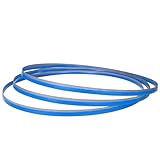 |
YullSorom 44-7/8-Inch x 1/2 Portable Bandsaw Blade 10-14 TPI,…
|
9.7 |
Read Review |
 |
DEWALT Portable Band Saw Blade, 32-7/8-Inch, .020-Inch, 24 TPI,…
|
9.4 |
Read Review |
 |
for Milwaukee 48-39-0609 35-3/8″ 8-10 TPI Extreme Thick Metal…
|
9.2 |
Read Review |
 |
Milwaukee 48-39-0631 30-9/16″ 12/14 TPI Compact Extreme Thick Metal…
|
8.9 |
Read Review |
 |
FOXBC 44-7/8-inch Bandsaw Blades 24 TPI, 44-7/8″ x 1/2″…
|
8.7 |
Read Review |
 |
FOXBC 44-7/8 inch Bandsaw Blades 8/12 TPI, 44-7/8″ x…
|
8.4 |
Read Review |
 |
Imachinist S933414 M42 93″ X 3/4″ X 10/14tpi Bi-Metal…
|
8.2 |
Read Review |
 |
FOXBC 80 Inch x 1/2 Inch x 6 TPI…
|
7.9 |
Read Review |
 |
Imachinist S6412121418SS M42 64-1/2″ Long, 1/2″ Wide, 0.025″ Thick,…
|
7.7 |
Read Review |
Quick Review For Top 10 Bandsaw Blades
LENOX Tools Portable Band Saw Blades, 44-7/8" x 1/2" x .020", 14 TPI, 5-Pack (8010738PW145)
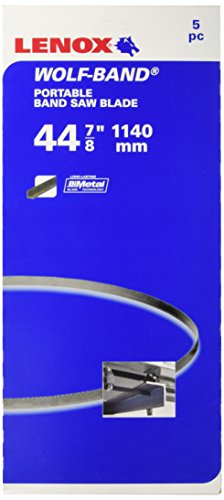
The LENOX Tools Portable Band Saw Blades, 44-7/8″ x 1/2″ x .020″, 14 TPI, 5-Pack (8010738PW145) is a set designed for cutting through metal with reliability. These blades are built for portable band saws and focus on durability and consistent performance. You get five blades in the pack, each measuring 44 and seven-eighths inches long, half an inch wide, and twenty-thousandths of an inch thick.
The 14 teeth per inch (TPI) rating makes them suitable for cutting a range of materials, from thin-walled tubing to solid bar stock, offering a balance between speed and a smoother finish.
The teeth are made from high speed steel. This gives them a strong, long lasting cutting edge that holds up under tough use. You don’t have to worry about them dulling quickly on standard steel or stainless steel. The blades are shatter resistant, which adds a layer of safety.
If you hit a unexpected stress point, the blade is less likely to break apart violently. Instead, it handles the pressure better.
A key feature is the bi-metal construction. The body of the blade is flexible, while the teeth are hard. This design allows the blade to bend around curves or through tight cuts without breaking. It resists the kind of breakage that ruins a cut or damages your saw. This flexibility also extends the overall blade life, so you get more cuts per blade over time.
YullSorom 44-7/8-Inch x 1/2 Portable Bandsaw Blade 10-14 TPI, bandsaw Blades for Milwaukee 48-39-0551,DeWalt DCS374B Band Saw Blades 44-7/8" x 1/2" x .020", 3-Pack for DW3984

The YullSorom 44-7/8-Inch x 1/2 Portable Bandsaw Blade 10-14 TPI comes in a 3-pack. Each blade measures exactly 44-7/8 inches long, half an inch wide, and 0.020 inches thick. The tooth count is 10-14 TPI with a hook teeth profile. This is a precise size for many portable band saws.
These blades fit a wide range of tools. They work with Milwaukee models like the M18, M20, 0720-20, and 0720-21. They also fit the DeWalt DCS374B, DCS376B, DW3983, D28770, DWM120K, and DW328.
You can use them with the Makita XBP02Z, the Wen 94396, and the Bosch GCB10-5. If your saw requires a 44-7/8 inch long blade, these should work. The compatability list is extensive, but it is always a good idea to double-check your saws manual.
The material is M42 bimetal. This gives the blade high wear resistance and good red hardness. It has strong fatigue resistance and can handle big tension. The tooth hardness is high, which helps with cutting efficiency.
You will notice that the blade stays sharp longer than standard carbon steel blades. It also handles heat well during heavy use. The flexibility is good, so it can bend around small wheels without breaking.
For application, this blade cuts steel and non-ferrous metals. You can use it on copper and aluminum without issue. The 10-14 TPI range is a good all-around choice. It works for thin wall tubing and also for thicker stock. The hook tooth design helps pull the material into the cut.
DEWALT Portable Band Saw Blade, 32-7/8-Inch, .020-Inch, 24 TPI, 3-Pack (DW3984C)

The DEWALT Portable Band Saw Blade, 32-7/8-Inch, .020-Inch, 24 TPI, 3-Pack (DW3984C) is built for tough cutting jobs. You get three blades in one pack, so you have backups ready when you need them. Each blade is 32-7/8 inches long, with a .020-inch thickness and 24 teeth per inch. That tooth count is great for cutting through thin metal like pipe, conduit, or sheet metal. It leaves a clean, smooth edge without too much burr. The cutting edge uses Matrix II high speed steel.
This material is designed to handle heat and wear better than standard steel. When you are cutting through metal, friction builds up fast. A blade that resists heat stays sharper longer. You won’t have to swap blades as often during a big project. That saves you time and frustration. There is also 8% cobalt content mixed into the steel. Cobalt adds extra durability and wear resistance.
It helps the blade hold its edge even when you are cutting abrasive materials or running the saw at higher speeds. The tooth hardness is rated at Rc 65-67. That is a high hardness level, which means the teeth are less likely to dull quickly. You get more cuts per blade before you need to change it. The backer of the blade is made from alloy steel. This part gives the blade fatigue resistance. When a blade flexes over and over around the saw’s wheels, it can crack or break.
for Milwaukee 48-39-0609 35-3/8" 8-10 TPI Extreme Thick Metal Bandsaw Blades 3PK

The Milwaukee 48-39-0609 35-3/8″ 8-10 TPI Extreme Thick Metal Bandsaw Blades 3PK is designed for serious cutting jobs. You get three blades in this pack. Each blade is 35 and 3/8 inches long. They are bi-metal blades. The tip material is metal. The blade width is half an inch. The thickness is 0.02 inches.
These blades are for portable band saws. They work best on thick metal. The primary material application is stainless steel. But they can cut aluminum and soft alloys too.
They also cut steel and steel alloys. The metal cutting type is solid stock. So you are not dealing with pipes or structurals here. These are for solid bars and plates.
The teeth per inch are 8 and 10. This is a variable TPI design. That means you can cut through different thicknesses without changing blades. One blade really does work for all metal thicknesses. That saves you time on the job.
Now lets talk about performance.
Milwaukee claims these blades give you 3 times the life in stainless steel cuts. That is significant if you work with tough materials regularly. The tooth design is aggressive. It gives you 2 times faster cuts in thick metals. So you spend less time cutting and more time moving on to the next task.
You will also get 25 percent more cuts per charge. That helps if you are using a cordless saw. Every bit of battery life counts on a job site.
Milwaukee 48-39-0631 30-9/16" 12/14 TPI Compact Extreme Thick Metal Band Saw Blade 3 Pack

The Milwaukee 48-39-0631 30-9/16″ 12/14 TPI Compact Extreme Thick Metal Band Saw Blade 3 Pack is built for heavy duty cutting. You are getting three blades in this pack, each one measuring just over thirty inches long. The tooth pitch is a combination of 12 and 14 teeth per inch. This design lets you handle a range of metal thicknesses without switching blades.
More cuts. Less blade changes. Thats the core promise here.
Milwaukee engineered these blades to last longer in tough materials. You get up to three times the life when cutting stainless steel and other extreme metals. That means less downtime on the job site. You can push through thick stock without worrying about the blade dulling fast.
Thin metals are no problem either. The blade cuts up to two times faster in thinner materials. This speed helps you move through jobs quickly. You also get 25% more cuts per charge on your cordless band saw.
That extra runtime adds up over a full day of work. You wont be swapping batteries as often.
The optimized tooth design is a key feature. It delivers clean cuts with less burring. You dont have to spend extra time cleaning up after each cut. The blade tracks straight and stays stable. This reduces vibration and makes your work more precise.
These blades work well with Milwaukee’s compact band saws. They are a direct fit for the M12 and M18 Fuel models.
FOXBC 44-7/8-inch Bandsaw Blades 24 TPI, 44-7/8" x 1/2" x .020", Replacement for DeWalt DW3984, Milwaukee 48-39-0531 Portable Band Saw, 3-Pack

The FOXBC 44-7/8-inch Bandsaw Blades 24 TPI, 3-Pack is a set of replacement blades designed for portable band saws. Each blade measures 44-7/8 inches long, 1/2 inch wide, and 0.020 inches thick. The 24 TPI (teeth per inch) configuration is suited for cutting through metal and other harder materials with a smoother finish.
These blades are made from Bi-Metal M42 High Speed Steel.
This material offers good heat resistance and durable welds, which helps the blade hold up during demanding cuts. The package includes three blades, giving you spares ready to go when the current blade wears out.
You need to make sure your saw uses a 44-7/8 inch long blade. The FOXBC blades are a direct replacement for several popular models. They fit the DeWalt DW3984 and the Milwaukee 48-39-0531 and 48-39-0534, which are used in both M18 FUEL and corded saws.
They are also compatable with other brands and models like the Bosch GCB10-5, Dewalt D28770, Dewalt DCS374B, Dewalt DCS376B, Dewalt DWM120K, Dewalt DW328, Makita XBP02Z, Makita 792555-A, and the Wen 94396. If you own any of these saws, or any other band saw that requires a 44-7/8 inch blade, this set should work.
The dimensions are important for performance and safety.
FOXBC 44-7/8 inch Bandsaw Blades 8/12 TPI, 44-7/8" x 1/2" x .020" Replacement for DeWalt, Milwaukee Portable Band Saw Blades, 3-Pack

The FOXBC 44-7/8 inch Bandsaw Blades 8/12 TPI, 44-7/8″ x 1/2″ x .020″ Replacement for DeWalt, Milwaukee Portable Band Saw Blades, 3-Pack are built for straight talk and clean cuts. If you need a reliable blade for your portable band saw, these are purpose-made to match the exact specifications of your tool. Each blade measures 44-7/8 inches long, 1/2 inch wide, and 0.020 inches thick. The tooth configuration is 8/12 TPI, which is a variable pitch design.
This means you get a balance between faster cutting in softer materials and smoother finishes on thinner metal. The blades are not universal; they are specifically made for saws that require a 44-7/8-inch blade length. They are compatible with a wide range of models, including DeWalt DW3983, D28770, DCS374B, DCS376B, DWM120K, and DW328. They also fit Makita XBP02Z, Wen 94396, Bosch GCB10-5, and Milwaukee 48-39-0521 and 48-39-0501 M18 FUEL and corded portable band saws.
Double-check your saw’s blade length before ordering to ensure a proper fit. The material is where these blades earn their keep. FOXBC uses premium Bi-Metal M42 High Speed Steel. This is a tough alloy that resists heat and wear. The M42 steel holds a sharp edge longer than standard carbon steel, which means fewer blade changes during a job. The bi-metal construction also adds flexibility, helping the blade handle the stress of cutting through metal without snapping.
Imachinist S933414 M42 93" X 3/4" X 10/14tpi Bi-Metal Metal Cutting Band Saw Blades

The Imachinist S933414 M42 93″ X 3/4″ X 10/14tpi Bi-Metal Metal Cutting Band Saw Blade is built for cutting soft ferrous metals like mild steel, angle iron, and tubing. It measures exactly 93 inches long and 3/4 inches wide, with a thickness of 0.035 inches. This blade is a straight swap for any bandsaw that uses a 93-inch blade, including the popular 7 x 12 models. You don’t need to modify your machine to make it fit. The key feature here is the M42 bi-metal construction.
M42 is a high-speed steel with 8% cobalt, which gives the teeth serious heat resistance. This means the blade stays sharp longer when you are cutting through metal, reducing how often you need to change it. The bi-metal design also gives you a flexable back made from spring steel, so the blade can handle tension without snapping. It is a good balance of durability and cutting performance. The 10/14 TPI (teeth per inch) is a variable pitch pattern. This is not a single, uniform tooth size.
Instead, it shifts between 10 and 14 teeth per inch along the blade. This variation helps reduce vibration and noise when you are cutting. It is especially good for thin pipe, tube profiles, and structural shapes. When you cut a thin-walled tube, a coarse tooth might grab and strip the material, but the 10/14 TPI provides a smoother, more controlled cut. The variable teeth also help clear chips away from the cut, which keeps the blade running cooler.
FOXBC 80 Inch x 1/2 Inch x 6 TPI Bandsaw Blade for Sears Craftsman 12" Band Saw – 2 Pack

The FOXBC 80 Inch x 1/2 Inch x 6 TPI Bandsaw Blade for Sears Craftsman 12″ Band Saw – 2 Pack is a set of two precision cutting tools designed specifically for your Sears Craftsman 12-inch band saw and model 137.224320. These blades measure 80 inches long, half an inch wide, and 0.02 inches thick. They fit most saws that take an 80-inch blade, so you can count on a snug fit without any hassle.
Each blade is made from premium high-grade carbon steel.
This material handles heat well and stands up to tough jobs. The steel is heat-resistant and the weld is strong, so the blade stays reliable even during long cutting sessions. You get a tool that lasts longer than cheaper options because of its build quality.
The design focuses on smooth, clean cuts. The teeth have an optimal geometric arrangement that reduces vibration and keeps the cut steady. The welding technique is unique, making the blade thinner without losing strength.
A thinner blade means less stress on the blade itself, which helps it last longer and cut more precisly over time.
This blade works with a variety of materials. It cuts hardwood and softwood easily, so it is great for furniture or general woodworking. It also handles plastics and non-ferrous metals like aluminum or brass.
Imachinist S6412121418SS M42 64-1/2" Long, 1/2" Wide, 0.025" Thick, 14/18 TPI, Variable Teeth, Bi-Metal Bandsaw Blades for Cutting Stainless Steel, Hard Metal, SS

The Imachinist S6412121418SS M42 64-1/2″ Long, 1/2″ Wide, 0.025″ Thick, 14/18 TPI, Variable Teeth, Bi-Metal Bandsaw Blades for Cutting Stainless Steel, Hard Metal, SS is a blade built for tough jobs. If you work with stainless steel or other hard metals, this is likely the blade you need. It is 64 and a half inches long, half an inch wide, and just 0.025 inches thick.
These dimensions are standard for many 4×6 inch bandsaws, so it should fit your machine if it uses that size.
The key feature here is the bi-metal M42 construction. This means the blade has a high-speed steel edge that is electron beam welded to a flexible spring steel backer. The spring steel backer helps the blade last longer by absorbing shock and reducing breakage. The welded joint is high quality, so you don’t have to worry about it snapping under pressure.
This blade is designed for cutting stainless steel, other steels with a hardness under 30 HRC, and all ferrous metals. It is not recommended for non-ferrous metals, so stick to the hard stuff.
The tooth profile is a variable 14/18 TPI. This means the teeth alternate between 14 teeth per inch and 18 teeth per inch. It gives you a smoother cut and reduces vibration, which is important when cutting tough materials.
Bandsaw Blades Buying Guide
Bandsaw blades come in various tooth patterns for different materials. Picking the wrong one can ruin your workpiece—or worse, snap the blade mid-cut. Here is how to match the blade to your project without guesswork.
Tooth Pitch and TPI
Tooth pitch is the distance between teeth, measured in teeth per inch (TPI). A common mistake? Using a fine-tooth blade on thick stock. It clogs and burns. A coarse blade (3-4 TPI) cuts thick wood fast but leaves a rough edge. A fine blade (14-24 TPI) gives smooth cuts on thin metal or plastic. For general woodworking, a 6 TPI blade works well. Count the teeth before you buy—more isn’t always better.
Tooth Set Patterns
Three set patterns dominate: raker, wavy, and alternate. Raker sets have one tooth straight, one left, one right. It’s ideal for resawing thick lumber. Wavy sets are common on metal-cutting blades becuase thay reduce vibration. Alternate sets, where teeth tilt left and right, suit general-purpose cutting. If your cuts wander, you might have the wrong set pattern.
Blade Width and Thickness
Width determines cutting radius. A 1/8-inch blade turns tight curves—great for scrollwork. A 1-inch blade cuts straight lines only but resists twisting. Thicker blades are stronger but require more power. Thin blades flex, making them prone to breaking under stress. Think about your saw’s wheel size; too wide a blade won’t fit.
Material Compatibility
Carbon steel blades are cheap and good for softwoods. Bi-metal blades have high-speed steel teeth welded to a flexible back—they handle metal and hardwoods without dulling. Carbide-tipped blades last longest but cost more. For cutting stainless steel, you need a carbide-tipped blade with a positive rake angle. A beginner often overspends on carbide when carbon steel would suffice.
Real-life Tip
Ever had a blade snap mid-cut? It usually happens from improper tension or dull teeth. Check your saw’s manual for tension settings. Replace blades when cuts become slow or burn marks appear. Keep a spare on hand—you’ll thank yourself later.
Frequently Asked Questions About Bandsaw Blades
What size bandsaw blade do I need?
You need to check your bandsaw’s manual. The key measurements are length, width, and thickness. Length must match your machine. Width depends on what you cut. Thinner blades cut tight curves. Wider blades cut straight lines. Measure your old blade or look up the specs online.
How do I choose the right tooth pitch?
Tooth pitch means how many teeth per inch (TPI). For thick wood, use a low TPI like 3 to 6. For thin metal or plastic, use a high TPI like 14 to 24. A good rule is to have at least three teeth in the material at all times. This prevents snagging and gives a smooth cut.
What blade material is best?
Carbon steel blades are cheap and work well for wood. Bimetal blades last longer and handle metal better. Carbide-tipped blades are the toughest. They cut hard materials like stainless steel. For most home projects, a bimetal blade is a solid choice.
How tight should I tension the blade?
You want it tight but not over stretched. A good test is to pluck the blade like a guitar string. It should make a clear note, not a dull thud. Many bandsaws have a tension guage. Follow the setting for your blade width. Too loose and the blade wanders. Too tight and it can break.
Why does my blade keep breaking?
Common reasons are wrong tension, dull teeth, or a bad weld. Also check your guides and wheels. If thay are misaligned, it puts stress on the blade. Always let the blade reach full speed before cutting. Forcing the material can also cause breaks. Take your time and feed slowly.
Can I resharpen bandsaw blades?
Yes, but it’s tricky and not always worth it. Carbide blades are hard to sharpen at home. Carbon steel blades can be sharpened with a file or sharpening stone. However, resharpening changes the tooth geometry. Most people just buy new blades. They are cheap enough for small shops.
What blade is best for cutting curves?
Use a narrow blade with a low TPI. A 1/4-inch wide blade with 6 TPI is great for tight curves. The narrow width allows the blade to turn without binding. Make relief cuts first to reduce stress on the blade. Go slow and let the blade do the work.
Quick Recap
Choosing teh right blade for your saw doesn’t have to be complicated. You just need to think about what your cutting—the material type and thickness matter most. Then match that with the right tooth count and set. A blade with more teeth gives you a smoother finish, while fewer teeth cut faster through thick stock. Always check your saw’s specs before buying, too. That simple step saves you time and money. Keep your blades clean and sharp, and they’ll last longer. You’ll get better results with less effort. I think that’s a solid plan for any project.
So next time you need fresh bandsaw blades, you’ll know exactly what to look for. Just remember those three things: material, tooth count, and saw compatibility. You’ll cut through your work with less hassle and more confidence. No more guessing or buying the wrong size. Your projects will thank you, and so will your saw. Give it a try—you might be surprised how much easier things get. Happy cutting, and don’t forget to wear your safety gear.