Ripping blades use flat-top teeth for fast, aggressive cuts with wood. If you’ve ever struggled with table saw blade ripping, you know how frustrating it is when your blade bogs down. You want clean, straight cuts without burning the wood. That’s what makes a good ripping blade so important. It’s the tool that turns a chore into a joy.
This review will help you choose the best blade for your needs. You don’t need a fancy blade to get great results. We’ve tested the top contenders to save you time and money. Ready to upgrade your workshop? Let’s find the perfect ripping blade for you. Your projects deserve a smooth, fast start every time.
Product Comparison Table: 10 Best Table Saw Blade Ripping
| Image | Why We Like This Product | Editor’s Rating | |
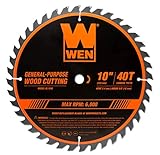 |
WEN BL1040 10-Inch 40-Tooth Carbide-Tipped Professional Woodworking Saw Blade…
|
9.5 |
Read Review |
 |
DEWALT 10 in. 24 Tooth General Purpose Saw Blade,…
|
9.3 |
Read Review |
 |
DEWALT Table Saw Blade, 10″, 40 Tooth, with Fine…
|
9.1 |
Read Review |
 |
CMT 256.050.10 ITK Xtreme Industrial Combination Saw Blade, 10-Inch…
|
9.0 |
Read Review |
 |
FOXBC 10-Inch Thin Kerf Ripping Table Saw Blade for…
|
8.8 |
Read Review |
 |
Diablo Ripping Saw Blade for Wood – 10″ Diameter,…
|
8.6 |
Read Review |
 |
Freud LM72M010: 10″ Heavy-Duty Rip Blade
|
8.4 |
Read Review |
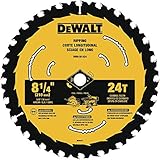 |
DEWALT Circular Saw Blade, 8 1/4 Inch, 24 Tooth,…
|
8.3 |
Read Review |
 |
FOXBC 10 Inch Combination Saw Blade, 50-Tooth, Wood Cutting,…
|
8.1 |
Read Review |
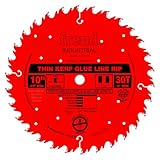 |
Freud LM75R010: 10″ Industrial Thin Kerf Glue Line Ripping…
|
7.9 |
Read Review |
Quick Review For Top 10 Table Saw Blade Ripping
WEN BL1040 10-Inch 40-Tooth Carbide-Tipped Professional Woodworking Saw Blade for Miter Saws and Table Saws
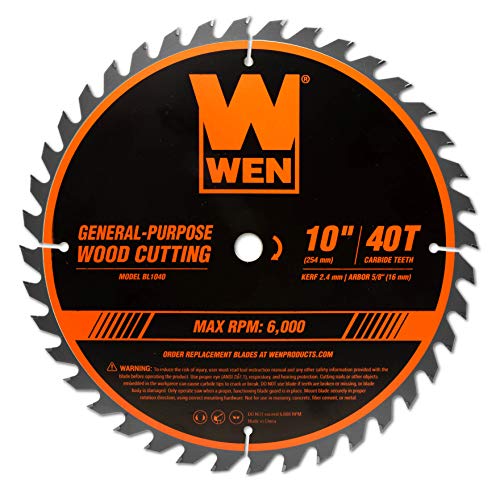
The WEN BL1040 10-Inch 40-Tooth Carbide-Tipped Professional Woodworking Saw Blade for Miter Saws and Table Saws is built for everyday cutting jobs. It measures a standard 10 inches in diameter with a 5/8-inch arbor, so it fits most miter saws, jobsite saws, and table saws you probably already own. The blade is rated to handle up to 6000 RPM, which is plenty fast for general shop use.
This blade is designed to slice through both hardwoods and softwoods without much trouble.
Whether you are cutting pine, oak, maple, or cedar, the 40 carbide-tipped teeth do a solid job. They are arranged for general-purpose wood cutting, meaning you can use it for crosscuts, rip cuts, and even some miters. The teeth stay sharp longer than standard steel blades, so you won’t need to replace it as often.
The kerf is ultra-thin at only 1/10-inch (2.4 mm). This is a big advantage because it removes less material as you cut.
You get cleaner cuts with less waste, and your saw motor doesn’t have to work as hard. It also means you can make more cuts from a single board compared to a thicker blade. The thin kerf helps reduce splintering on the surface, which is nice when you are working on visible woodwork.
One thing to note is that the arbor is 5/8-inch, which is the most common size for saws in this class. If your saw uses a different arbor, you might need an adapter.
DEWALT 10 in. 24 Tooth General Purpose Saw Blade, Ultra Sharp Carbide Table Saw Blade (DWA11024)

The DEWALT 10 in. 24 Tooth General Purpose Saw Blade, Ultra Sharp Carbide Table Saw Blade (DWA11024) is built for everyday cutting tasks. It is a straight forward tool designed to handle common materials like framing lumber, plywood, and MDF. You don’t need to be a professional to appreciate what this blade offers.
First, it lasts up to three times longer than standard blades. That means less time swapping out blades and more time working on your project.
The carbide tips are ultra sharp, so they stay effective cut after cut. You won’t notice it dulling quickly, which is a real plus if you do a lot of cutting.
Accuracy is a key focus here. The tooth geometry is optimized to help you make cleaner, more precise cuts. This design reduces wobble and helps the blade track straight through the wood. For a general purpose blade, it gives you a level of control that feels reliable.
You can trust it for crosscuts and rip cuts without constant adjustments.
The blade also focuses on clean cutting. The ultra sharp carbide does not tear out the wood fibers as much as cheaper blades do. Your edges will be smoother, which means less sanding or finishing work later. It is a nice time saver when you want a decent result right off the saw.
Installation is standard and fits most 10-inch table saws. The arbor size is common, so you can swap it in with no hassle.
DEWALT Table Saw Blade, 10", 40 Tooth, with Fine Finish, Ultra Sharp Carbide (DWA11040)

The DEWALT Table Saw Blade, 10″, 40 Tooth, with Fine Finish, Ultra Sharp Carbide (DWA11040) is a direct replacement blade designed for clean, accurate cuts in wood and wood-based materials. This is a general purpose blade, meaning it handles crosscuts, rips, and miters without needing to swap blades constantly. You get a 10-inch diameter with 40 teeth, which is a standard size for most job site and cabinet table saws.
The main thing you will notice is the blade life.
DEWALT says it lasts up to 3 times longer than standard blades. That is not a marketing gimmick; the carbide tips are formulated to hold their edge through abrasive materials like plywood and MDF. You will spend less time changing blades and more time working.
Accuracy comes from the optimized tooth geometry. Each tooth is shaped and angled to reduce vibration and deflection as it cuts.
This means the blade stays true to your cut line, reducing the need for cleanup passes with a sander or jointer. The result is a smoother edge right off the saw. For trim work, cabinetry, or furniture parts, this matters a lot. You get a fine finish that requires minimal sanding before staining or painting.
The ultra sharp carbide is ground to a sharp edge right from the factory. It slices through fibers rather than tearing them.
CMT 256.050.10 ITK Xtreme Industrial Combination Saw Blade, 10-Inch x 50 Teeth 4 ATB + 1 Flat Grind with 5/8-Inch Bore

The CMT 256.050.10 ITK Xtreme Industrial Combination Saw Blade, 10-Inch x 50 Teeth 4 ATB + 1 Flat Grind with 5/8-Inch Bore is built for serious cutting work. It handles both rip cuts and crosscuts without needing to swap blades. The large gullets are a key feature here. They let you make deep cuts and clear away chips effectively, so the blade doesn’t get bogged down during heavy use.
You can use this blade on a range of materials.
It cuts solid wood, melamine, laminates, plywood, and chipboard. It works well on radial arm saws, miter saws, and table saws. The 0.098 kerf thickness and 0.071 plate thickness strike a balance between stability and material removal. The 15° hook angle helps the blade pull into the cut smoothly, giving you control without aggressive feeding.
The tooth grind is a 1 Flat plus 4/20° alternate teeth setup. This design leaves a smooth finish on wood and wood products.
The micrograin carbide tips are long-lasting. They stay sharp through many cuts, so you get consistent performance over time. The blade is made for precision, not just speed.
The laser-cut plate includes expansion slots. These slots reduce noise and help with anti-vibration. You will notice less chatter and a more stable cut, even on longer boards. The 5/8-inch bore fits most standard saw arbors.
FOXBC 10-Inch Thin Kerf Ripping Table Saw Blade for Wood Cutting, 24-Tooth FTG, 5/8-Inch Arbor

The FOXBC 10-Inch Thin Kerf Ripping Table Saw Blade for Wood Cutting, 24-Tooth FTG, 5/8-Inch Arbor is built for straight talk about cutting wood. This is a 10 inch blade with a thin kerf of .094 inches and a plate thickness of .071 inches. The 24-tooth FTG (flat top grind) design, paired with a 20 degree hook angle, makes it a dedicated ripping blade. It is designed to move fast through material, not to give you the smoothest crosscut, though it can handle those too.
You get high quality thin kerf and plate construction here. That means less resistance when you push wood through the blade. The result is faster cutting with less strain on your saw. It also means less vibration and noise compared to thicker blades. The finish on your rip cuts will be clean and straight. The blade is made from high-density tungsten carbide. This gives it real toughness and wear resistance. It will hold its edge longer, so you are not replacing it every few weeks.
For a busy workshop or a weekend project, that durability is a big plus. This blade works with most popular saws. It is compatable with DeWalt, Skil, Metabo, and Makita 10 inch miter saws and table saws, along with many others. The 5/8 inch arbor is the standard size, so it fits right on. It is ideal for quick ripping operations in both hardwoods and softwoods. If you need to cut a 2×4 lengthwise, this blade handles it fast.
Diablo Ripping Saw Blade for Wood – 10" Diameter, 24 ATB Teeth, 5/8" Arbor, .098" Kerf, 15° Hook Angle, .071" Plate, Max 6000 RPM – D1024X

The Diablo Ripping Saw Blade for Wood D1024X is a 10-inch blade built for making straight, fast cuts through lumber and sheet goods. It is designed specifically for rip cuts, which means cutting with the grain of the wood. If you are working with framing lumber, hardwoods, plywood, or OSB, this blade is a solid choice for your saw.
This blade uses a high-performance TiCo material with hi-density carbide. The carbide is formulated for this specific job.
It gives you superior quality rip cuts on material from 3/4 of an inch up to 2-3/4 inches thick. You will notice the blade stays sharp longer because the carbide is harder and more durable than standard tips. It cuts cleanly through the wood without much effort from your saw.
One of the handiest features is the Perma-SHIELD non-stick coating. This coating covers the blade and protects it from heat buildup, gumming from resin in the wood, and corrosion.
When you cut through pine or other sticky woods, the blade wont get gunked up as fast. This keeps the cuts smooth and the blade running cooler. It also helps the blade last longer because rust and sap wont damage the steel.
The blade has a super thin laser cut kerf. The kerf is just .098 inches wide. This thin slot means the blade removes less material, so your saw motor works less. You get faster cuts and less waste.
Freud LM72M010: 10" Heavy-Duty Rip Blade

The Freud LM72M010 is a 10-inch heavy-duty rip blade designed for serious table saw work. You are looking at a blade built specifically for ripping lumber along the grain. It has 24 teeth with a flat grind and a 20-degree hook angle, which is aggressive enough to pull material through quickly without bogging down. The arbor size is a standard 5/8-inch, so it will fit most cabinet and contractor saws.
The kerf measures .126 inches, and the plate is .087 inches thick, giving you a good balance between a clean cut and material removal speed.
What makes this blade stand out is the premium TiCo HI-Density Carbide blend. This is not a cheap steel blade. The carbide is formulated to stay sharp longer, even when you are cutting dense hardwoods, plywood, or pressure-treated lumber. You will notice less burning and less effort required to push stock through the saw.
The extra large, flat tooth design is a key feature here. Instead of leaving a rough, torn surface that needs sanding or jointing, this blade leaves a finish that is remarkably smooth right off the saw. For many projects, you can skip the extra step of sanding the ripped edge before glue-up or assembly.
Freud also added laser-cut anti-vibration slots in the plate. These slots do a great job of dampening vibration and reducing sideways movement during the cut.
DEWALT Circular Saw Blade, 8 1/4 Inch, 24 Tooth, Framing & Ripping (DWA181424)

The Dewalt Circular Saw Blade, 8 1/4 Inch, 24 Tooth, Framing & Ripping (DWA181424) is built for heavy framing work. You are getting a blade that focuses on straight, fast cuts through lumber, including wood that might have old nails in it. The design is straightforward and practical for job site use.
The standout feature is the patent-pending toughtrack tooth design. This is not just marketing talk. It means the blade maintains its cutting line accurately over its entire lifespan.
You won’t see the blade wander or drift as it gets used, which is a common problem with cheaper blades. This keeps your cuts square and true from the first cut to the last.
Each tooth is made from high-density tungsten carbide. This material is chosen for its toughness and wear resistance. It holds an edge much longer than standard steel. For a framing blade that sees a lot of use, this translates to fewer blade changes and more consistent performance.
You are paying for durability here.
There is a tough coat anti-stick coating on the blade. This reduces friction as you cut. It also helps prevent gumming, which is when pitch and resin from the wood build up on the blade teeth. Less gumming means the blade cuts cooler and cleaner, and you spend less time cleaning it. The coating makes the blade slide through the material smoother.
The blade uses a thin kerf design. A thinner kerf means the blade removes less material as it cuts.
FOXBC 10 Inch Combination Saw Blade, 50-Tooth, Wood Cutting, 5/8-Inch Arbor

The FOXBC 10 Inch Combination Saw Blade, 50-Tooth is built for straight cuts on wood and wood composites. It handles ripping with the grain and crosscutting against it, aiming for a smooth finish without extra sanding.
The blade uses an ATB (Alternate Top Bevel) tooth grind. Each set of 5 teeth is seperated by a large gullet. These deep gullets clear out sawdust quickly when you rip lumber.
At the same time, the tight grouping of teeth inside each set gives a smaller bite for cleaner crosscuts on materials like oak, pine, or melamine. This design keeps your saw cutting cleanly without bogging down.
You get a 10-inch diameter with a .098-inch kerf and a 15-degree hook angle. The plate is .071-inch thick, and it fits a standard 5/8-inch arbor. The thin kerf removes less material, so your saw motor works easier.
That means less vibration and noise during use, plus a cleaner cut edge. The blade is made from high-density FoxCarbide tungsten carbide. This material gives toughness and wear resistance, so the blade stays sharp longer with regular use.
This blade works with most 10-inch miter saws and table saws from brands like DeWalt, Skil, Metabo, and Makita. It is a good choice for cutting solid woods like oak or pine, as well as plywood, melamine, and molding.
Freud LM75R010: 10" Industrial Thin Kerf Glue Line Ripping Blade, Carbide
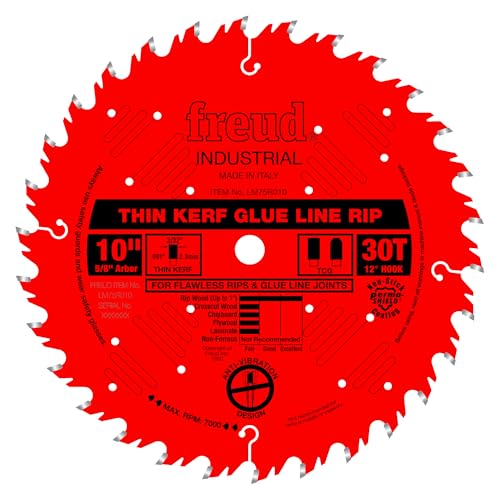
The Freud LM75R010 is a 10-inch industrial thin kerf glue line ripping blade designed for serious woodworkers. It features a carbide tip blend engineered for maximum performance in demanding rip cuts. You get a 5/8-inch arbor, a 10-inch diameter, and a TCG grind. The hook angle sits at 12 degrees, which is perfect for aggressive ripping through solid wood. This blade has 30 teeth, with a kerf of .091 inches and a plate thickness of .071 inches.
That thin kerf means you lose less material to sawdust, so your lumber goes further. The heavy-duty thick kerf and plate combination ensures the blade stays stable and flat during use. That stability translates directly to a longer cutting life, because the blade won’t warp or wobble under pressure. The premium TiCo HI-Density Carbide Ripping Blend is a big deal for performance. It holds an edge longer than standard carbide, so you spend less time sharpening and more time working.
This blend is specifically formulated for the high-stress environment of ripping dense hardwoods. You will notice the laser-cut anti-vibration slots built into the blade body. These slots drastically reduce vibration and sideways movement in the cut. That reduction in vibration extends the overall blade life and gives you a crisp, splinter-free, flawless finish on your glue lines. For joinery work, a clean glue surface is critical, and this blade delivers that.
Table Saw Blade Ripping Buying Guide
Thick stock demands a powerful table saw blade ripping design with a flat grind. You need clean cuts through hard maple, oak, or even plywood, without burning teh edges or bogging down your saw. Picking the right blade is not just about speed; it’s about safety and finish quality. A good ripping blade saves you time sanding and reduces waste. Let’s look at what matters most.
Tooth Count and Hook Angle
Fewer teeth cut faster. For ripping, 24 to 30 teeth is the sweet spot. More teeth generate heat and friction, which leads to burn marks. Look for a high positive hook angle, around 15 to 20 degrees. This pulls the stock into the blade aggressively. It makes feeding hardwood much easier. But watch out—a high hook angle can grab thinner boards. Always use push sticks.
Plate Thickness and Stability
A thin blade flexes under pressure. You want a thicker plate, at least 0.090 inches, for straight cuts. Thicker plates also reduce vibration. Ever had a blade wobble on a dense piece of walnut? That’s a stability problem. A stiff plate stays true, giving you a smoother finish and less kickback risk. Check the kerf too; full kerf blades are more stable than thin kerf ones.
Carbide Grade and Coating
Not all carbide teeth are equal. C3 or C4 grades hold an edge longer in abrasive woods. Cheaper blades dull fast on plywood or MDF. Some blades also have a non-stick coating. This reduces resin build-up, wich keeps the cut cool. You don’t need a coated blade for softwoods, but for pine or cedar, it helps prevent sticky gumming.
Flat Top Grind (FTG)
This is the standard for ripping blades. FTG teeth cut like chisels, removing material fast. They leave a rougher finish than alternative grinds, but that’s fine for ripping—you’ll joint or plane the stock later. A combo blade with alternate top bevel (ATB) can rip and crosscut, but for heavy stock, stick with FTG for best speed.
Frequently Asked Questions About Table Saw Blade Ripping
What does “ripping” mean for a table saw blade?
Ripping means cutting wood along teh grain. It’s different from crosscutting, which cuts across the grain. A ripping blade is designed for this task. It has fewer teeth and deeper gullets. This helps remove sawdust fast. You get smoother cuts with less burn on the wood.
How many teeth should a ripping blade have?
Most ripping blades have 24 to 30 teeth. This is a good range for clean cuts. Fewer teeth cut faster but leave a rougher finish. More teeth give a smoother cut but can slow you down. For general ripping, 24 teeth is a solid choice. If you want a finer edge, go for 30 teeth. It’s also fine to try 20 teeth for thick stock.
Can I use a ripping blade for crosscuts too?
You can, but it’s not the best idea. A ripping blade leaves a rougher edge on crosscuts. It can also cause tear-out. For best results, use a combination blade or switch blades. If you only rip most of the time, a dedicated ripping blade works great. Just know it’s not perfect for every cut.
What size blade do I need for ripping?
Check your saw’s manual. Most table saws use 10-inch blades. Some smaller saws take 8-inch blades. A 10-inch blade rips up to 3.5 inches deep. That’s enough for 2×4 lumber. For thicker stock, you may need a 12-inch blade. Always match the blade size to your saw’s arbor and guard.
Are ripping blades good for plywood?
Ripping blades can work on plywood, but thay aren’t ideal. Plywood has lots of glue and thin layers. A ripping blade may cause chipping or rough edges. For plywood, a crosscut or plywood blade is better. If you must rip plywood, use a blade with more teeth. A 40-tooth blade is a good compromise.
How do I know if my blade is dull?
You’ll notice the saw working harder. The cut might get rough or burn marks appear. You may also feel more vibration. A dull blade is dangerous because it can kick back. Replace or sharpen your blade when you see these signs. Regular cleaning helps it last longer too.
Before You Decide
Ripping boards requires tough blades—these deliver fast, straight cuts through grain. You want a blade that can handle hardwoods and softwoods alike, without slowing down or burning the wood. Stick with blades that have a high tooth count if you need smoother edges, or fewer teeth for speed. A thin kerf design helps your saw motor last longer, especially on smaller saws. Check the arbor size matches your saw too—it’s an easy detail to overlook. Your budget matters, but don’t skip on steel quality or carbide tips, since cheaper blades dull faster and cause tear-out.
For most DIY and pro work, a combination blade can cover ripping and crosscuts, but dedicated table saw blade ripping gives you the fastest results. Pair your blade with a sharp setup—keep it clean and store it safely to avoid chips. If you’re working on a big project like furniture or shelving, the right ripping blade saves you time and frustration. You’ll notice the difference in how smooth the cut feels and how straight it stays. Pick a blade that fits your common wood thickness, and you’ll be set for dozens of cuts with little effort.